One of the many anomalies around literacy is the belief that reading, and its close companion writing, are ‘basic’ or ‘lower-order’ skills. This belief has had a number of pernicious effects. Many teachers, particularly those teaching older students, have assumed that literacy is ‘basic’ and therefore irrelevant to the ‘higher order’ skills with which they are concerned. Because of this assumption that literacy is simple , the complexities of reading and writing have only been addressed superficially, or not at all, in teacher training. Thirdly, in the absence of good information, poor theory and damaging practice have prospered, blighting literally millions of lives.
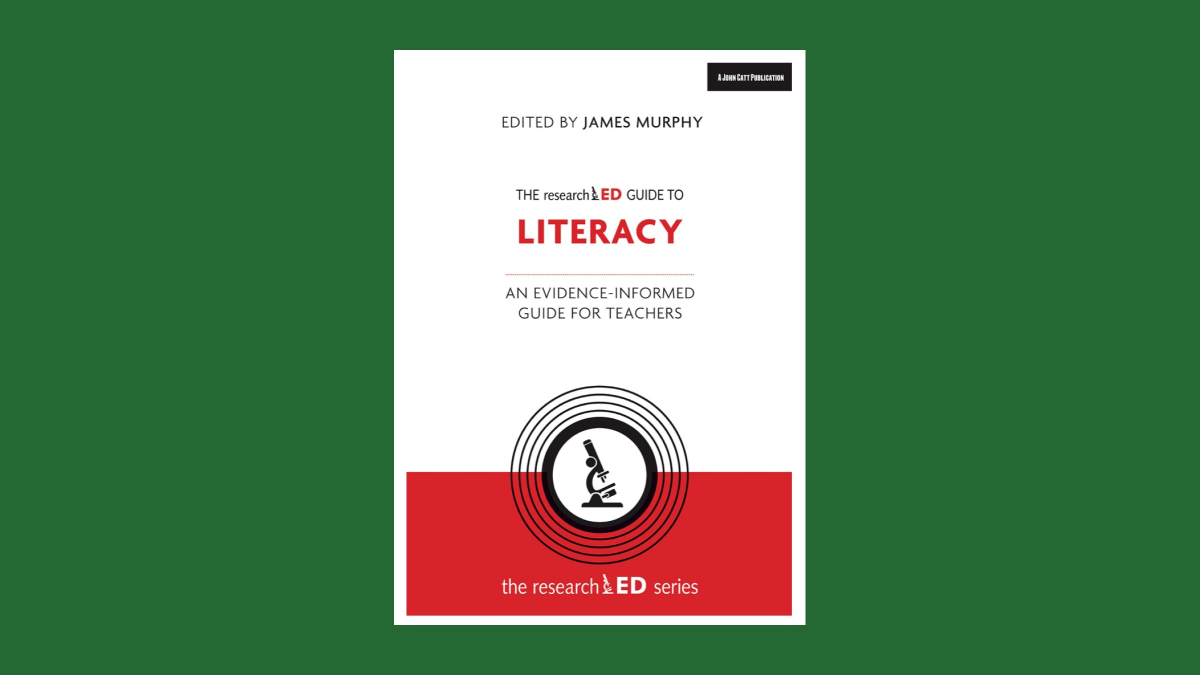
The researchED Guide to Literacy is subtitled An evidence-informed guide for teachers. The evidence concerned tells us is that literacy involves complex skills, that the benefits of literacy are immense, and that the consequences of poor literacy are pervasive, enduring and highly damaging. Reading becomes ever more important to independent learning as students progress through their education. It follows that understanding how we learn to read is essential to being able to teach. The essays also include contributions on writing skills, spelling, vocabulary and the many myths that have subverted effective literacy education over the last five decades.
Every teacher should read the first chapter, by Professor Kathleen Rastle. In The Journey to Skilled Reading, she traces the development of the intricate cognitive processes required to become a skilled reader. She begins with oral language, progressing on to the highly systematic sound-to-spelling relationship, and goes on to consider the reader’s experience of text. This experience builds morphological knowledge, which greatly enhances comprehension and the ability to work out the meaning of new words. As readers develop even more fluency, a direct print-to-meaning (‘orthographic’) mapping is thought to develop, and these interwoven domains then benefit spoken language. This article is a condensed version of the paper Rastle completed with Castles and Nation, Ending the reading wars: Reading acquisition from novice to expert.
The second chapter, by Dr Kerry Hempenstall, is a sobering insight into the myths and fallacies that have bedevilled education for decades. He objectively considers and dispatches the three cueing system in reading, learning styles, process training, Irlen Syndrome, and a host of other attempts to solve the reading problem by some other means than the effective teaching of reading. Again, all teachers should read this chapter to gain an appreciation of what constitutes evidence in education, and how turning to that evidence can protect us and our students from harm.
Further chapters in the book consider the assessment of literacy (Jessie Ricketts and James Murphy), how we respond when students struggle with reading (Kevin Wheldall, Robyn Wheldall, and Jennifer Buckingham), what we need to know about spelling (Rhona Stainthorp), teaching vocabulary explicitly (Alex Quigley), and the most promising approaches for teaching writing, especially for those who struggle the most (Tom Needham). The book closes with a chapter by Dianne Murphy on effective reading intervention at secondary school.
If you’re a teacher who uses language, particularly written language, to teach your students, this book is for you.
The researchED Guide to Literacy is published by John Catt Education on behalf of researchED.


Share this article
Pass it on to someone who might find it useful.